Auto Generated via Readwise
These are my highlights created/synced via Readwise.io - Referral Link
About
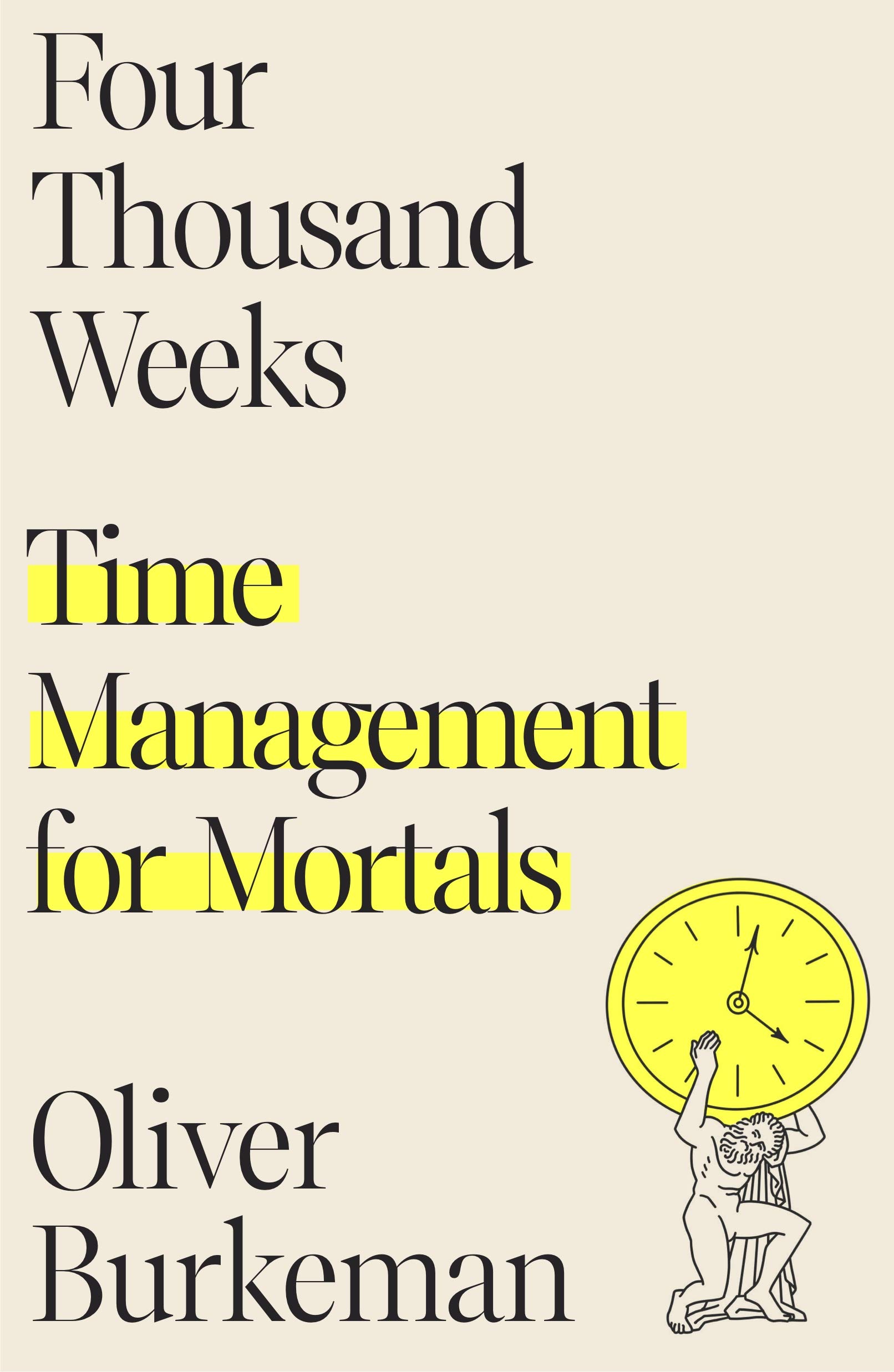
Title: Four Thousand Weeks
Authors: Oliver Burkeman
Category: supplementals
Number of Highlights: 20
Date: 2025-06-05
Last Highlighted: **
Highlights
The most effective way to sap distraction of its power is just to stop expecting things to be otherwise—to accept that this unpleasantness is simply what it feels like for finite humans to commit ourselves to the kinds of demanding and valuable tasks that force us to confront our limited control over how our lives unfold.
Tags: focus
There is an alternative: the unfashionable but powerful notion of letting time use you, approaching life not as an opportunity to implement your predetermined plans for success but as a matter of responding to the needs of your place and your moment in history.
The real problem isn’t our limited time. The real problem—or so I hope to convince you—is that we’ve unwittingly inherited, and feel pressured to live by, a troublesome set of ideas about how to use our limited time, all of which are pretty much guaranteed to make things worse.
Tags: perspective, stress, work:life
The world is bursting with wonder, and yet it’s the rare productivity guru who seems to have considered the possibility that the ultimate point of all our frenetic doing might be to experience more of that wonder.
The real measure of any time management technique is whether or not it helps you neglect the right things.
Productivity is a trap. Becoming more efficient just makes you more rushed, and trying to clear the decks simply makes them fill up again faster.
Tags: favorite, productivity, work:life
You need to learn how to start saying no to things you do want to do, with the recognition that you have only one life.”
Tags: needs, negotiation, self-care
Historians call this way of living “task orientation,” because the rhythms of life emerge organically from the tasks themselves, rather than from being lined up against an abstract timeline, the approach that has become second nature for us today.
The fundamental problem is that this attitude toward time sets up a rigged game in which it’s impossible ever to feel as though you’re doing well enough. Instead of simply living our lives as they unfold in time—instead of just being time, you might say—it becomes difficult not to value each moment primarily according to its usefulness for some future goal, or for some future oasis of relaxation you hope to reach once your tasks are finally “out of the way.”
The technologies we use to try to “get on top of everything” always fail us, in the end, because they increase the size of the “everything” of which we’re trying to get on top.
Tags: technology, work:life
Principle number one is to pay yourself first when it comes to time.
Tags: time
The way to find peaceful absorption in a difficult project, or a boring Sunday afternoon, isn’t to chase feelings of peace or absorption, but to acknowledge the inevitability of discomfort, and to turn more of your attention to the reality of your situation than to railing against it.
“Because children grow up, we think a child’s purpose is to grow up,” Herzen says. “But a child’s purpose is to be a child. Nature doesn’t disdain what only lives for a day. It pours the whole of itself into each moment … Life’s bounty is in its flow. Later is too late.”
Convenience culture seduces us into imagining that we might find room for everything important by eliminating only life’s tedious tasks. But it’s a lie. You have to choose a few things, sacrifice everything else, and deal with the inevitable sense of loss that results.
The overarching point is that what we think of as “distractions” aren’t the ultimate cause of our being distracted. They’re just the places we go to seek relief from the discomfort of confronting limitation.
Worry, at its core, is the repetitious experience of a mind attempting to generate a feeling of security about the future, failing, then trying again and again and again—as if the very effort of worrying might somehow help forestall disaster.
The second principle is to limit your work in progress.
When you can no longer turn back, anxiety falls away, because now there’s only one direction to travel: forward into the consequences of your choice.
The final principle is that, more often than not, originality lies on the far side of unoriginality.
The trouble with attempting to master your time, it turns out, is that time ends up mastering you.