Readwise: Connect the Dots
Original: https://www.amazon.com/dp/B00JBEYOF8
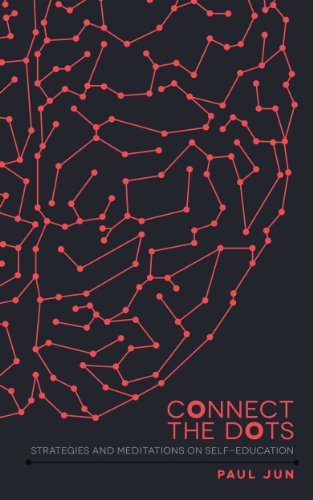
SUMMARY
A short, punchy manifesto on self-directed learning. Paul Jun argues that traditional schooling trains us to be passive recipients of knowledge, and that reclaiming ownership of your learning “through curiosity, writing, and deliberate reflection” is the foundation of meaningful work and creative output. The “dots” are ideas, experiences, and skills that seem disconnected until they suddenly aren’t.
Learning Is a Responsibility, Not a Gift
part of joy in learning is that it puts me in a position to teach; nothing, however outstanding and however helpful, will ever give me any pleasure if the knowledge is to be for my benefit alone. (52)
- From Connect the Dots
Seneca’s point cuts deep: knowledge hoarded is knowledge wasted. The real pressure of learning isn’t just to absorb, it’s to eventually transmit. Teaching forces clarity and reveals gaps you didn’t know existed. When teaching you are forced to further refine and reduce to ensure the audience understands further improving your knowledge.
Writing Is Advice to Your Past Self
Austin Kleon, author of Steal Like An Artist, “It’s one of my theories that when people give you advice, they’re really just talking to themselves in the past. This book is me talking to a previous version of myself.” (110)
- From Connect the Dots
Austin Kleon’s framing is one of the most useful reframes for writer’s block. You’re not trying to be an authority you’re just writing a letter to who you used to be. That’s achievable. It also explains why personal experience makes for the most honest writing.
Urgent vs. Important
And it’s quite frankly easier to do the trivial things that are “urgent” than it is to do the important things. But when we choose urgent over important, what we’re really choosing is other people’s priorities over our own. (507)
- From Connect the Dots
The clearest statement in the book. When you default to urgent tasks, you’re quietly outsourcing your priorities to someone else. Most of what feels urgent is just loud, not actually important to your own goals.
The Real Challenge Is Mindfulness, Not Tools
The challenge isn’t to find better tools to lead a more productive life, it’s learning to be mindful of the tools that have already taken root. Mindfulness while using technology is important, and therefore the future belongs to those who can tame their distractions. (515)
- From Connect the Dots
Easy to miss in a world full of productivity app recommendations. The bottleneck isn’t having the right system it’s the attention you bring to whatever system you have. The future belongs to people who can stay present long enough to do deep work.
Curiosity as an Antidote
Curiosity is the panacea to boredom. If you are having a hard time connecting a dull body of knowledge to your endeavors, keep asking yourself questions and don’t sleep until you find at least a glimmer of an answer. (315)
- From Connect the Dots
The practical advice here: if a topic feels dry, don’t give up, keep asking questions until a thread of genuine interest appears. Curiosity isn’t a personality trait you either have or don’t. It’s a habit you practice.
Self-Education Requires Letting Go of Being Right
It’s enormously disorienting to simply say, ‘I don’t know.’ But it’s infinitely more rewarding to understand than to be right — even if that means changing your mind about a topic, an ideology, or, above all, yourself.” (684)
- From Connect the Dots
This is the psychological price of real learning. Saying “I don’t know” feels like a loss when you’re used to school rewarding right answers. But intellectual flexibility, the willingness to update your beliefs, is what separates genuine understanding from performance.